
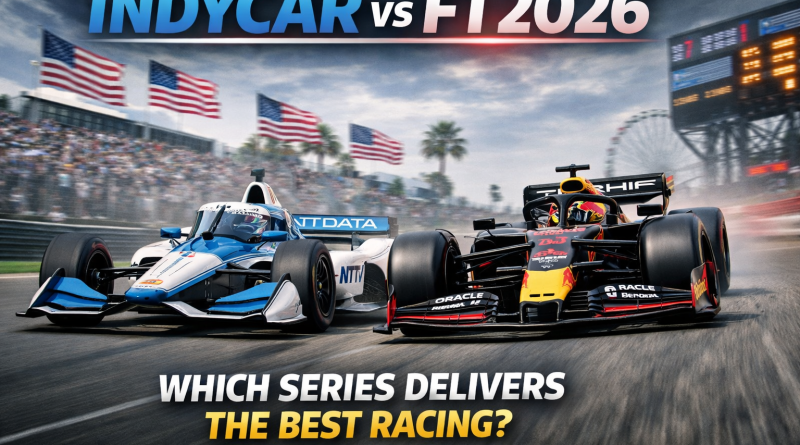
IndyCar vs F1 in 2026: Which Series Actually Delivers the Best Racing?
For American motorsport fans, the question is no longer whether Formula 1 belongs in the United States. With three Grands Prix on U.S. soil and record-breaking audiences, F1 has firmly established itself across the Atlantic.
But as the 2026 season approaches with sweeping technical changes in Formula 1 a more nuanced debate is emerging:
Which series actually delivers better racing: IndyCar or F1?
The answer isn’t as obvious as it once was.
Parity vs Performance: Two Philosophies, Two Worlds
At the core of the comparison lies a fundamental difference in philosophy.
IndyCar is built on controlled parity.
Spec chassis. Limited development. Tight performance margins.
Formula 1, by contrast, is engineering freedom at its peak. Even under cost caps, teams design their own cars, push aerodynamic boundaries, and interpret regulations creatively.
The result?
IndyCar often produces tighter grids and more unpredictable podiums.
F1 produces technological masterpieces but sometimes with clearer performance gaps.
In 2026, F1 introduces a radical power unit overhaul with a 50/50 split between internal combustion and electrical energy. The reset could compress the field, but history suggests that regulation changes often widen gaps before they close them.
IndyCar, meanwhile, remains stable and balanced a known quantity in terms of competitive density.
On-Track Action: Wheel-to-Wheel or Strategy Chess?
If your definition of “best racing” is pure wheel-to-wheel combat, IndyCar holds a strong argument.
Overtaking is frequent.
Races are often decided in the final laps.
Drivers fight aggressively across ovals, street circuits, and permanent road courses.
Formula 1, however, operates on a different layer.
Modern F1 is a strategic ecosystem:
- Tire degradation models
- Energy deployment management
- Undercut timing
- Aerodynamic sensitivity
When the field is tight, F1 delivers high-intensity strategic battles. When one team dominates, however, the spectacle can suffer.
IndyCar thrives on variability.
F1 thrives on excellence.
Which one you prefer depends on whether you value chaos or precision.
Driver Factor: Depth vs Stardom
F1 boasts global superstars and generational talents. The international spotlight magnifies rivalries and elevates drivers into cultural icons.
IndyCar offers something different: depth.
The margins between drivers are razor-thin.
Midfield teams can realistically fight for podiums.
Veterans and young talents compete on relatively equal mechanical footing.
In IndyCar, a small mistake can cost five positions instantly.
In F1, a small advantage in car development can define an entire season.
From a pure driving perspective, IndyCar’s equalized machinery arguably showcases driver skill more transparently.
From a technical-driver synergy standpoint, F1 demands a different kind of mastery the ability to extract performance from complex systems.
Business, Growth, and the American Market
There is no denying Formula 1’s commercial momentum in the U.S.
- Miami’s glamour
- Austin’s tradition
- Las Vegas’ spectacle
F1 has positioned itself as a premium global product. The Netflix effect brought new fans, younger audiences, and mainstream attention.
IndyCar, while historically rooted in American racing culture, operates on a more traditional model. It may lack F1’s global branding machine, but it retains authenticity and accessibility.
In simple terms:
F1 feels global and aspirational.
IndyCar feels grounded and competitive.
2026: A Turning Point?
The 2026 Formula 1 regulation changes could reshape the debate.
If the new power unit formula successfully compresses the field and reduces dominance cycles, F1 may combine technical brilliance with closer racing a potentially unbeatable combination.
If development disparities create another performance hierarchy, the parity advantage will remain firmly in IndyCar’s favor.
Meanwhile, IndyCar continues refining its product without radical upheaval. Stability could be its competitive weapon.
So… Which One Delivers the Best Racing?
If you value:
- Tight fields
- Frequent overtakes
- Unpredictable winners
- Driver-driven outcomes
IndyCar makes a compelling case.
If you value:
- Engineering innovation
- Strategic depth
- Global scale
- Elite technological competition
Formula 1 remains unmatched.
The real answer?They are different forms of excellence.
In 2026, the most interesting question may not be which series is better but whether Formula 1 can evolve toward the competitive intensity that IndyCar has mastered for years. For American fans, that’s not a rivalry.
It’s a privilege.
Related :
- A look back at the IndyCar season opener in St. Petersburg.
- Miami Grand Prix 2026: Full Schedule and Session Times (Local Time)